poet, performer, teaching artist.
Maya Salameh is a Syrian- and Lebanese-American writer from San Diego, California. She is the author of Mermaid Theory (Haymarket Books, 2026) and How to Make an Algorithm in the Microwave (University of Arkansas Press, 2022), winner of the Etel Adnan Poetry Prize and finalist for the California Book Award. Her poems have appeared in The Rumpus, Poetry, The Offing, LitHub, Gulf Coast, AGNI, ANMLY, and the LA Times, among others.
A 2025 National Endowment for the Arts Fellow, Maya has received the Sewanee Review Poetry Prize, the Lambda Literary Award for Exceptional New Writers, and support from the Tin House Writers' Workshop, Kenyon Review Writers' Workshop, and Sewanee Writers' Conference. From 2016–2017, she served as a National Student Poet, America's highest honor for youth poets. She has taught poetry workshops for Brooklyn Poets, Ellipsis Writing, and Workshops4Gaza, with a focus on experimental forms and ecopoetics. She is currently a law student at UCLA, where she aims to be a civil rights litigator.
A 2025 National Endowment for the Arts Fellow, Maya has received the Sewanee Review Poetry Prize, the Lambda Literary Award for Exceptional New Writers, and support from the Tin House Writers' Workshop, Kenyon Review Writers' Workshop, and Sewanee Writers' Conference. From 2016–2017, she served as a National Student Poet, America's highest honor for youth poets. She has taught poetry workshops for Brooklyn Poets, Ellipsis Writing, and Workshops4Gaza, with a focus on experimental forms and ecopoetics. She is currently a law student at UCLA, where she aims to be a civil rights litigator.
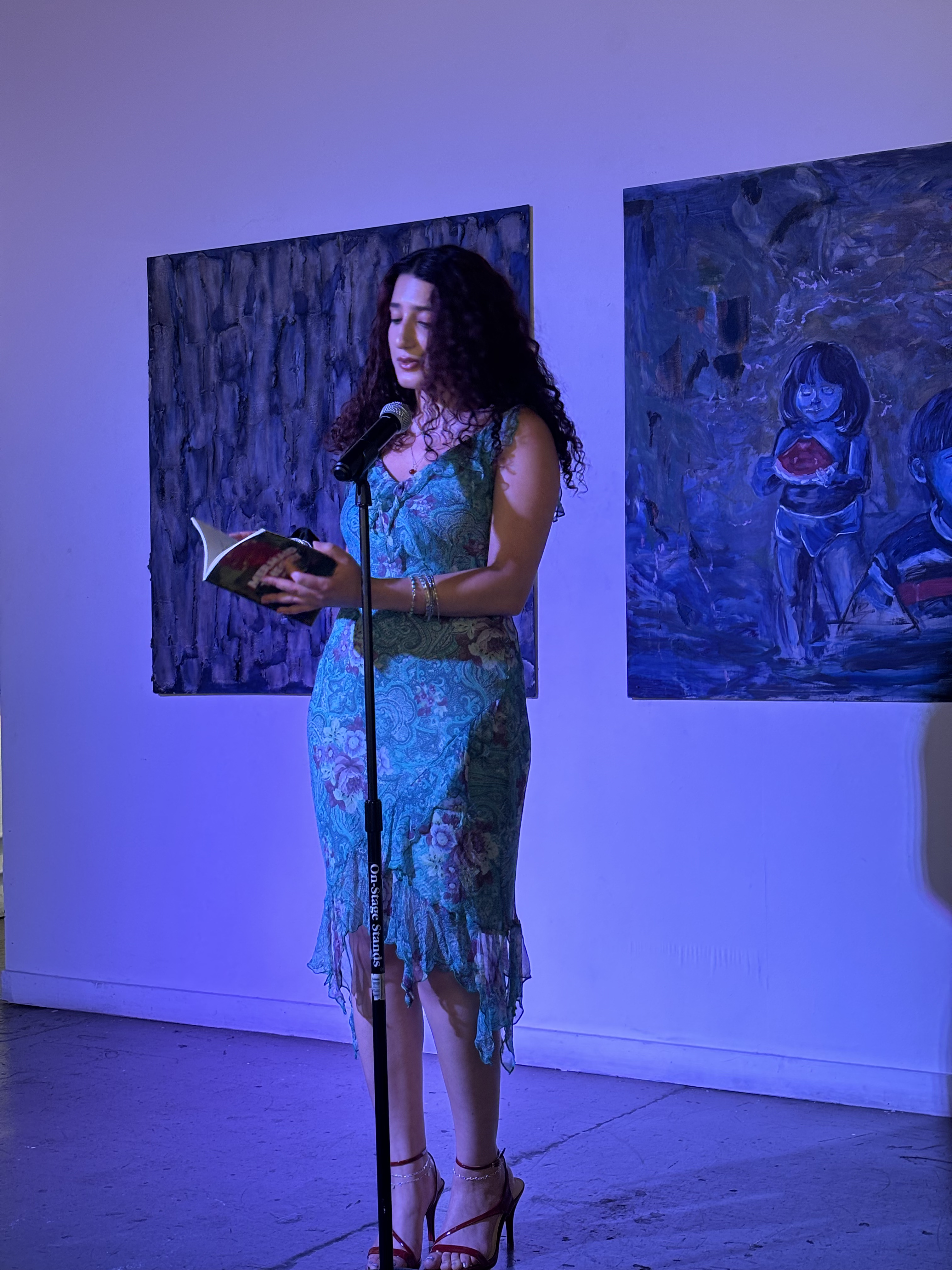
selected honors
Sewanee Review Poetry Prize • National Endowment for the Arts Poetry Fellowship • Lambda Literary Award for Exceptional New Writers • Etel Adnan Poetry Prize • Tin House Summer Scholar • Kenyon Review Summer Scholar • Sewanee Writers' Conference RAWI Fellow • Bread Loaf Environmental Writers' Conference Full Scholarship • Co-Chair, Stanford Institute for Diversity in the Arts • Inaugural Artist-in-Residence, Markaz Resource Center • Paper Nautilus Debut Chapbook Prize • National Student Poet

.JPG)


